Vision ?
A great leader is someone who has a clear vision and is able to inspire and motivate others towards that vision. They have a long-term perspective and can effectively communicate their goals and objectives.
Integrity ?? ??
A great leader demonstrates honesty, trustworthiness and ethical behaviour. They lead by example and hold themselves to high moral standards.
Effective Communication ? ?
A great leader is an excellent communicator. They are able to convey their message clearly and concisely, and they also actively listen to others. They encourage open and honest communication within their team.
Empathy ?
A great leader is able to understand and relate to the emotions and experiences of others. They show empathy towards their team members, which helps to build strong relationships based on trust and mutual respect.
Decisiveness ?
A great leader is able to make decisions in a timely manner. They gather all necessary information, analyse the situation and confidently make informed choices. They are not afraid to take calculated risks.
Adaptability ?
A great leader is flexible and can adapt to changing circumstances. They are open to new ideas and willing to learn from their mistakes. They lead with resilience and can handle changes effectively.
Accountability ✋
A great leader takes responsibility for their actions and decisions. They hold themselves accountable and expect the same from their team members. They also admit their mistakes and learn from them.
Inspiring & Motivating ?
A great leader is able to inspire and motivate their team members. They foster a positive work environment, encourage growth and development and recognise and reward achievements.
Collaboration ?
A great leader understands the value of collaboration and teamwork. They involve their team members in decision-making processes and encourage diverse perspectives. They build strong relationships based on mutual respect.
Continual learning ??
A great leader is committed to lifelong learning and personal growth. They seek new knowledge and skills to stay relevant in their field and inspire their team members to do the same.
Leadership is a dynamic skill set that can be developed and improved over time.
Seizing the day with team development is crucial for businesses that want to remain competitive, innovative and successful. Here’s why:
1. Competitive Advantage
In today’s fast-paced and every-changing business environment, having a competitive advantage is crucial. Investing in team development can provide teams with the skills and knowledge needed to stay ahead of the competition, delivering better results and achieving success.
2. Enhanced Team Communication and Collaboration
Team development programmes can help improve communication among team members which, in turn, leads to more effective collaboration, better decision making and outcomes.
3. Improved Problem Solving
Developing problem-solving skills is essential for achieving success in business. By investing in team development you can improve these skills and reduce errors, saving both time and money in the long run.
4. Higher Employee Engagement
Investing in team development can help demonstrate that the company cares about its employees’ development and interests. This can foster a positive work environment that encourages employee engagement, motivation and loyalty leading to greater productivity and better job satisfaction.
5. Improved Creativity and Innovation
Providing team development opportunities can help individuals develop their creativity and innovation. This can lead to improved work processes and innovative solutions to challenges that a business may face.
6. Attract Talent and Retain Employees
Creating a work environment that prioritises team development can enable businesses to attract and retain top talent, which can lead to better business performance and reduced turnover.
Waiting to invest in team development can lead to missed opportunities, decreased productivity, a lack of essential skills and lower employee engagement. Investing in team development is critical to achieving business success and building a successful and sustainable future.
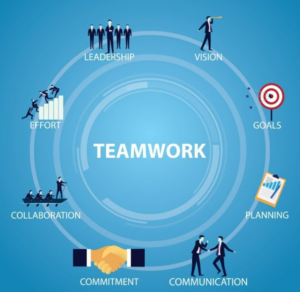
In a recent article from Harvard Business Review, ‘Cracking the Code of Sustained Collaboration’ author Francesca Gino, reflects on the desire of leaders to foster cultures of collaboration but who end up feeling frustrated that the effort that they put into that is not rewarded by sustained changes in behaviour.
Whilst it is true that collaboration is a skill that can be taught, people also need a reason to do it. A common goal that they can all get behind. But more importantly, one that makes the inevitable tricky conversations worth having.
Authentic, sustained collaboration is not an easy path for teams to take. On the rugby pitch understanding the personalities and ways of working with your team-mates is as important as understanding your own role and where your value lies. The same principle applies in the corporate world.
Having the ability to step into someone else’s shoes, understand what they are trying to achieve and their preferred ways of communicating enables much greater levels of collaboration and productivity.
Gino offers the following six training techniques that organisations can adapt to improve their collaboration skills ;
Teach People to Listen, Not talk
Train People to Practice Empathy
Make People More Comfortable with Feedback
Teach People to Lead and Follow
Speak with Clarity and Avoid Abstraction
Train People who have Win-Win Interactions
Transition 15 use approaches like these, and others, in our engagements with clients who are determined to create sustained collaboration throughout their business.
Acknowledging that every client is different, we tailor our approach to suit your needs and depending on your goals.
Transition 15 has been building high performance environments since 2007. We work with you and your team to co-design a culture and framework that enables your team to excel.

Transition 15 founder, Matt Perry reflects on his experience of elite sport and business environments and how that helps him to coach businesses and leaders to high performance.
My expertise is in leadership and team development which I was exposed to through the prism of elite sport. Initially as a young player, I looked up to and learned from mentors before becoming a senior player and imparting what I had learned to a new generation. I played in some fantastic teams during my time at Bath Rugby and also represented England and the British Lions where we were forced to accelerate team building and relationship-crafting processes before testing ourselves in incredibly high-pressure situations against the best teams in the sport.
Now I coach businesses and their leaders in principles that I have learned, developed and refined in some of the most testing environments and have seen similarities.
Aligned leadership
People can tell when leadership are at cross-purposes. In sport, this could be a coach and a captain obviously not agreeing and putting a brave face on things. There’s no reason to believe that this would be different at work. People respond to sincerity and a clear vision. They will check out mentally if they sense that management fundamentally disagree or can potentially ally with one point of view. This second eventuality is particularly disastrous.
Aggressive use of data
Sport has really embraced data analysis. Watch a top-flight sporting match, particularly in rugby and you will see an array of laptops in front of the coaches, providing them with live feedback during play to help inform their decisions.
You should be constantly analysing data in business, jettisoning what doesn’t work, refining what could work and doubling down on what does.
Sports people are constantly evaluated both by eye and by data analysis. Business people are not often analysed by either. Human performance analytics should be much more of a focus in the future of business.
Communication is critical
Data interpreters are critical in both sport and business. Without interpretation, data is noise. Very annoying noise that you don’t need and will then ignore, potentially to your cost. Work closely with your technologists, find a way to interpret what they tell you and integrate them into your team. High performance is impossible without analysis, interpretation and effective communication that leads to action. We use a behavioural analysis tool that provides data on how each team member likes to communicate, streamlining your processes and providing the optimum way to communicate information throughout your business. In sport and business, analytics is a team responsibility.
Ultimately, it’s a team game
In the NBA, teams focus on how the team performs when a player, or group of players, is in the game versus out of it. Even if a player has mediocre point and rebound totals, the team may perform better when that player is on the court. This is called their ‘plus/minus’. You might have these people in a business who individually don’t necessarily put up ‘big numbers’ but who are the office glue. They organise social events, help out struggling individuals or who just turn up every day smiling and positive. These people are hard to quantify but could be integral to your performance. Conversely, some people have great individual stats but can lead to an overall decline in team performance. How far you indulge individuals is something that needs assessing on a case-by-case basis.
Outsource what you don’t need to do yourself
Even large organisations can often benefit from strategic partnerships with external suppliers of analytical resources.
Sports teams enlist services like Catapult to do their data for them. Everyone needs something slightly different but don’t be afraid to outsource to a strategic partner. One of the things we do is work on optimising these relationships. Done well they can vault you forward. Done badly they can cause immense problems.
Do training
Sports people do training. We all know this. It’s been fetishised and glorified from Rocky montages to Jonny Wilkinson’s marathon kicking sessions and various gruelling Olympian regimes. How much training do you do in your business?
This doesn’t mean staying late, working longer, harder and faster. Some sports people overtrain. Overtraining leads to injury, fatigue and poor performance.
Work smarter, not harder is the operative philosophy here.
However, doing extra is certainly a way to make a little progress. Do you invest in upskilling your workforce?
Business could learn a little from the sporting mindset, improving a little every day and compounding gains over time rather than just clocking in and out.
'Have pride and purpose' - Richard Branson
Having a mission is important. People want to feel that what they do is for a reason, particularly with the rise of AI potentially leading to some forms of work becoming obsolete.
Having a reason or a goal at work is something that can motivate an individual and unify a team. To be fair these are obvious in sport. We want to win the World Cup. We want to stay in the Premier League.
But there are famous business goals too. IKEA want:
‘to create a better everyday life for the many people.’
What’s your higher purpose? Figuring it out and defining it can lead to monumental progress for your business and your workforce.
For an informal, confidential chat to explore how to transform your organisation’s teams, partnerships and employee engagement, contact Transition 15- e: info@transition15.com
For those of us who don’t know, what exactly is Transition 15?
Transition 15 builds sustainable high performing teams and strategic partnerships in business. Through our results-driven programmes we provide individual, team and company-wide consultation and coaching to help organisations achieve sustained levels of high performance. By releasing potential, increasing collaboration and dramatically improving team dynamic, we empower individuals and teams to achieve new levels of performance. We also specialise in helping organisations build and maintain successful strategic partnerships.
How has your professional sporting background enhanced your business capabilities?
To understand the value of collaboration in the workplace, consider my rugby experience playing in world-class, high-level teams. To win a rugby game, the forwards and the backs all have to excel in their roles. I certainly appreciated and encouraged production from my teammates who were primarily paid to drive, tackle and scrum the ball forwards.
The value of teamwork is recognised by all players as they work together towards something bigger- the common team goal of winning the game.
Transitioning into the business world, I discovered a direct correlation between these principles and the needs of the workplace. By recognising and appreciating the value of teamwork and guiding employees to collaborate, our clients are even better equipped to work towards a common big-picture goal…and sustain their success.
What companies have you already worked with, and what are the benefits they have seen from Transition 15?
Our clients have included Marks & Spencer, Visa, BBSRC, Ringway Jacobs, Novia and Paradigm.
M&S Logistics needed to build trust and high performance teamwork quickly following the creation of a complex strategic partnership with four of their competitive, international suppliers. M&S recognised that for the partnership to deliver the considerable business benefits they knew it could, the four companies needed to work as one team.
Transition 15 created and co-designed a programme with M&S that developed commitment to the principles of high-performance teamwork, a charter of behaviours and a 30-, 60- and 90- day action plan to which individuals and groups were held accountable. This initiative saved £22m within the first 18 months- and five years later the programme is embedded as part of their supply-chain culture.
Bath University Research described the M&S programme as ‘the best example of bringing a company and its suppliers together effectively’ that they had ever seen.
What are the core values of Transition 15?
Authenticity, integrity, action, curiosity, courage and candour.
Why do you think building high-performance teams and strategic partnerships is vital to any company?
Building high-performance teams and strategic partnerships is vital as it….
· Reaches team performance levels not previously achieved
· Releases the potential of each individual
· Deepens partner relationships
· Drives time and cost efficiency
· Changes internal behaviour
· Minimises risk and maximises opportunities
· Reduces time to market
· Increases levels of productivity
In a more digitally connected world of business, how important is communication and teamwork to an organisation?
Teamwork, collaboration and effective communication are inextricably linked to the success of any organisational change. It’s been repeatedly proven that effective teamwork and communication during change has a direct impact on many organisational outputs like commitment, performance, behaviours and job satisfaction. However, if communication and teamwork is not effective, its failure may cause stress, job dissatisfaction, low trust, decrease in organisational productivity and staff absence and turnover.
By emphasising the value of teamwork and the importance of collaboration, employees understand that everyone else can be more effective in their roles when they themselves do a good job - the value of collaboration soon becomes self evident to everyone involved. Each team member can then see the benefits inherent in giving their personal best in collaborative activities.
As a leader, manager or team member, you can all make an effort to create a better environment for everyone.
Can you explain how your leadership qualities have impacted Transition 15 - and others - business?
Transition 15’s leadership qualities are based on authenticity, effective problem solving and coaching for success. This has been reflected in our continual business growth and organic expansion through referral and recommendation.
Predictions for the upcoming Lions Tour?
The 2021 British and Irish Lions face a very tough challenge down in South Africa against the current world champions. The power of the Lions and having 4 teams into 1 is awesome but the team needs to have the unique ability to create a vision and way of working within days to overcome the physical nature of the Springboks .
As a British lion ? you need to leave your ego and nationality at the door, and enter with your character, competence and skill. Adopting this attitude, together with behaviour and individual brilliance, to succeed as one team is the opportunity that lays before them.
If the Lions can play intelligent football, move the South Africans around and play fast paced, high-energy rugby which is technically very good, they can win. It will take trust, belief and a service to each other which will define this year’s legacy and eventual test champion.
Come on the Lions! ?
For an informal, confidential chat to explore how to transform your organisation’s teams, partnerships and employee engagement, contact Transition 15- e: info@transition15.com
The Covid pandemic has led to the widespread adoption of new ways of working almost overnight. With the shift towards a variable mix of remote and office-based working as the new ‘normal’, organisations are now recognising the need for a broader transformation strategy and programme. Achieving this whilst adapting workspace to meet employee and business needs is key for future success.
Transition 15 founder, Matt Perry, shares his thoughts on why businesses should seize this opportunity to evaluate performance and to reshape into more resilient, agile and productive organisations that are ‘match fit‘ for the future.
What are the key areas of concern for business at the moment?
Whilst organisations are starting to function in a new ‚normal‘, with new ways of working, there is recognition that it has impacted on key areas related to business success including creativity and innovation, trust and connection as well as productivity and wellbeing.
Many organisations lack a clear, long-term strategy on how to adapt for their people, places of work and processes. This is vital for future success and presents a great opportunity to reimagine how and where we work.
How should businesses seize this as an opportunity?
The heart of an organisation is its people with the key to high and continued productivity being a people-centric approach. There should be recognition that each employee has had very different experiences over the last six months and their thoughts on future working may differ. Flexibility will be key.
This doesn’t mean organisations should be led by employees but it is important to listen to their needs and concerns and to ensure their buy-in for a future strategy and vision.
A key part of our approach at Transition 15 is to understand the needs of the individual, team and
organisation before co-designing a bespoke programme to meet the unique needs of each organsiation.
Do you see organisations continuing to need workspace in the future?
Absolutely, although rather than traditional office space, organisations are increasingly looking at
collaboration hubs. Shared workspace is vital for team collaboration and connection as well as creativity and
innovation- all of which have been impacted by the rapid shift in working habits. Learning and development opportunities, particularly for younger employees, and the on-boarding of new employees all rely heavily on
observational and experiential learning which can really only take place in person.
Organisations need a clear, long-term hybrid work strategy facilitating new ways of working whilst leveraging essential human interaction to create resilient, agile and productive organisations with a competitive edge.
How has Transition 15 been helping organisations during the pandemic?
At Transition 15, we have been using our experience in creating new team dynamics and ways of working to help individuals, teams and organisations develop and adapt at pace to a hybrid working model. Our approach supports organisations with a transformation programme optimising creativity, trust, connection, productivity and wellbeing across all workplace settings.
We’ve also recognised the need for an integrated approach to work culture and workplace transformation as organisations begin to navigate the ‘return to office’ process in the long run. Although Government guidance has reverted to a WFH policy where possible for now, forward-thinking organisations recognise that shared workspace will continue to be vital. What this looks like will differ from business to business. We’re excited to be partnering with IESIS Urban, design and fit-out strategists for workplace environments, to support organisations through this aspect of the transformation programme.
We’d love to chat to find out how we can enable a safe, successful and sustainable transition to hybrid working for your organisation over the next few months.
Part 2 - How can we shape and plan for the future. What sort of team and organisation do you want to be?
Firstly - how are you? Thank you to those that read, liked or commented on my first article ‘Managing in a Crisis’. Also, thanks to
those who got in touch to find out more about what we offer at Transition15.
Given the current climate it feels timely to share my approach to planning for the future based on past experiences and my commitment to continuous learning and development, both as a business leader and as a team player.
-
How do we work on the business and not in the business? What could we do and what might that look like?
By reflecting on both successes, and some failures, across a variety of roles, over the years, I have been able to maximise these experiences to help plan the next project better. What went well, what didn’t go so well and what would I/we do differently?
Sports Psychologist Bill Beswick, who has worked with Manchester United, and several England Football Youth sides, to name but a few, once said to me “Be ready” as you never know when the next opportunity comes around. Other coaches will tell of having a playbook. I like to work to a ‘framework’, that has been shaped and evolved from working with and in teams all my life, each-and-every one an opportunity to develop, adapt and evolve. My framework strategy works because it can be adapted to each-and-every team, and each-and-every organisation however different, as I strongly believe that no one-size or approach can ever fit all.
How would I describe the key components of my ’framework’ approach?
Share your Vision or Purpose - Have a clarity of purpose
Create a sense of shared ownership. What is it we want to achieve? How does this impact on how we want to be seen? And lastly, how will we bring our vision to life? Bring your people together and shape what the future looks like, together. In my experience this investment bonds people to agreed goals.
Leadership - Leadership of ourselves
How are we going to lead others to get the best for and from them and are we developing leaders for the future. My focus has always
been on servant led model; inspire and equip those around us as it’s not about having all of the answers but finding them together or empowering your people to have the confidence to look for solutions. Are we leading and driving the change necessary to be even more successful? What does good leadership look like within your organisation.
People - Building relationships
Trust in your guiding principles and your organisational shared values. Remember how and who you recruit to bring people on board with the necessary skills and capabilities; trust this and revisit it. Refine and invest in the development of your people and your training so that everyone works to improve every player every day in order to succeed. Aligning these behaviours brings the best out of people.
Environment – Build an empowering, positive, safe environment
Aligning this to previous elements and the practice of what we want to achieve. An empowered and positive environment is one where everyone takes responsibility for the learning and performance of the team and the organisation. A safe environment encourages some fun and where trust is a given. Create an environment where opinions matter and are valued, and where everyone has the space to be creative. And shape an environment of continual review and ‘be ready’ for revision.
-
From adversity comes opportunity. How can you make tomorrow better than today?
How are you going to develop your team and organisation over the coming months? Today/tomorrow/these coming few days and weeks is a great time to reflect, review, explore, challenge, support and develop your organisational framework.
We hope you find this useful.
If you're a business, sporting organisation or an
individual and would like an informal chat please feel free to contact me for
any help and support.
Please stay safe and stay well.
Martin Haag,
Performance Director
Transition 15
Martin@transition15.com
During this unprecedented situation around the Covid-19 pandemic Transition 15’s Performance Director Martin Haag has shared his experience of dealing with adversity, managing in a crisis and fighting for survival, using skills developed and honed coaching and playing professional rugby union.
Martin played for Bath and England during a successful career that moved from the amateur to the professional era and in 2016 he was appointed Head Coach of England’s RFU Under 20’s. Martin has been a key player at Transition 15 since 2018 leading our Performance team.
I often start by referring to Transition 15’s Founder Matt Perry who uses the mantra of 'to deal with ambiguity yet still execute’ which is the exact the situation we found ourselves in today.
Given the ambiguous operating landscape all businesses find themselves in today, as a leader, what can you do to help?
1. Clarity
Providing clarity in complex and ambiguous situations is not easy, but having clarity of thought and developing a clear path towards defined goals is an essential first step.
2. Confidence
Clarity and confidence are partners, with uncertainty and a lack of clarity creating a lack of confidence.
Having direction and a simple clear message when leading others on to the 'field of play’ helps team players get closer to executing what us required to deliver a performance and achieve the right result.
We need to give ourselves and our colleagues the belief that we can achieve in difficult times. Feeling sure in ourselves and in others builds trust and cohesion.
A ‘Situational leadership’ approach, where a leader adjusts their style to fit the development of an organisation, could be the best first step in leading your team or business at this time.
3. Growth Mindset
We want our people to grow, thrive and succeed, and so investing our efforts to help our colleagues through this period, in any period, is time well spent. Take time at the end of the day to reflect 'How do we make tomorrow better than today?’.
You’ll hear coaches talk about the ‘1% improvement’. Making your people feel valued whilst investing in their development will encourage the confidence to flex in their roles or change strategy should they need to.
It’s often during times of ambiguity that innovation flourishes and by encouraging the skills to be adaptable and deal with change will help build strength and resilience.
4. Short term Goals
Your organisational vision and mission should always remain central. During tough times, by breaking tasks in to weekly even daily goals helps teams to focus.
Having a clear picture of what needs to be done will make the steps required more obvious. Often it's as easy as making sure the simple things are being done well and controlling the controllables.
Tasks are like pieces of a jigsaw, nothing in isolation, with all tasks and roles being inter-linked.
-
During these tough times we bring our resilient strengths to the fore, and collaborate more, building even stronger relationships.
-
We hope you find this useful.
If you're a business, sporting organisation or an individual and would like an informal chat please feel free to contact me for any help and support.
Please stay safe and stay well.
Martin Haag,
Performance Director
Transition 15
Having been part of several world-class rugby teams, I reached a stage post-retirement when it was impossible to imagine ever being part of a team that was so trusting and technically brilliant again.
Whether playing for Bath, England, or the British and Irish Lions, I had to adapt to my teammates very quickly.
But now, as a co-founder of a company, I realise that there are many practical examples of rugby lessons that translate into the business world.
On the field, if you tell a talented player what to do, they tend to rebel.
Conversely if you give players a framework, and then coach them to the point that they feel empowered enough to identify new ways forward, the rewards are much greater.
The same applies in the workplace – employers need to give their talented workers the freedom to excel.
In rugby, we defined monthly goals, which would then be broken down into milestones.
These might relate to style of play in response to our competition, or the physical conditions that we were playing in. To succeed, we would need everyone on the team to be moving in the same direction on the pitch.
Sharing a common understanding of purpose and objectives, as well as an aspiration of the legacy that the team would want to leave behind, was critical for our success.
Be a good sport
Understanding the personalities of your teammates and how they work is as important as understanding your own role and where your value lies.
It may be that during the final moments of a game there’s an opportunity to come up with a new idea to help you win it. We had to be able to trust that idea and execute the move.
The same principle applies in the corporate world. Having the ability to step into someone else’s shoes and understand what they are trying to achieve enables far greater levels of collaboration and productivity.
We always talked about “heads-up” rugby, which is about players having the foresight to seize an opportunity rather than moving to a pattern.
Players will set out to execute a pre-agreed plan, but once the ball is in play, they need to be able to respond in flight. Similarly, in business there’s a clear advantage in retaining a broader perspective and being able to act intuitively to deal with a situation as it unfolds. The trick is planning for multiple scenarios.
In the sporting world, there’s an opportunity to improve every single day.
A rugby team will have their next game in seven days, so there isn’t the luxury of waiting for a three-month review. This makes the environment extremely fast-paced.
There is huge scope in the business world to be more agile when it comes to making decisions and rewarding small achievements in the same way. Just ask yourself every day, how can I make this better?
When coming off the field, players should be able to review that day’s performance and have input as to what can be done better.
It’s important to invite a culture where individuals are able to put their ideas forward, with respect to both what they are doing and what the company is doing.
The environment that you create, both on and off the field, allows the players to thrive.